A Sacred Covenant with Helel Ben Shachar
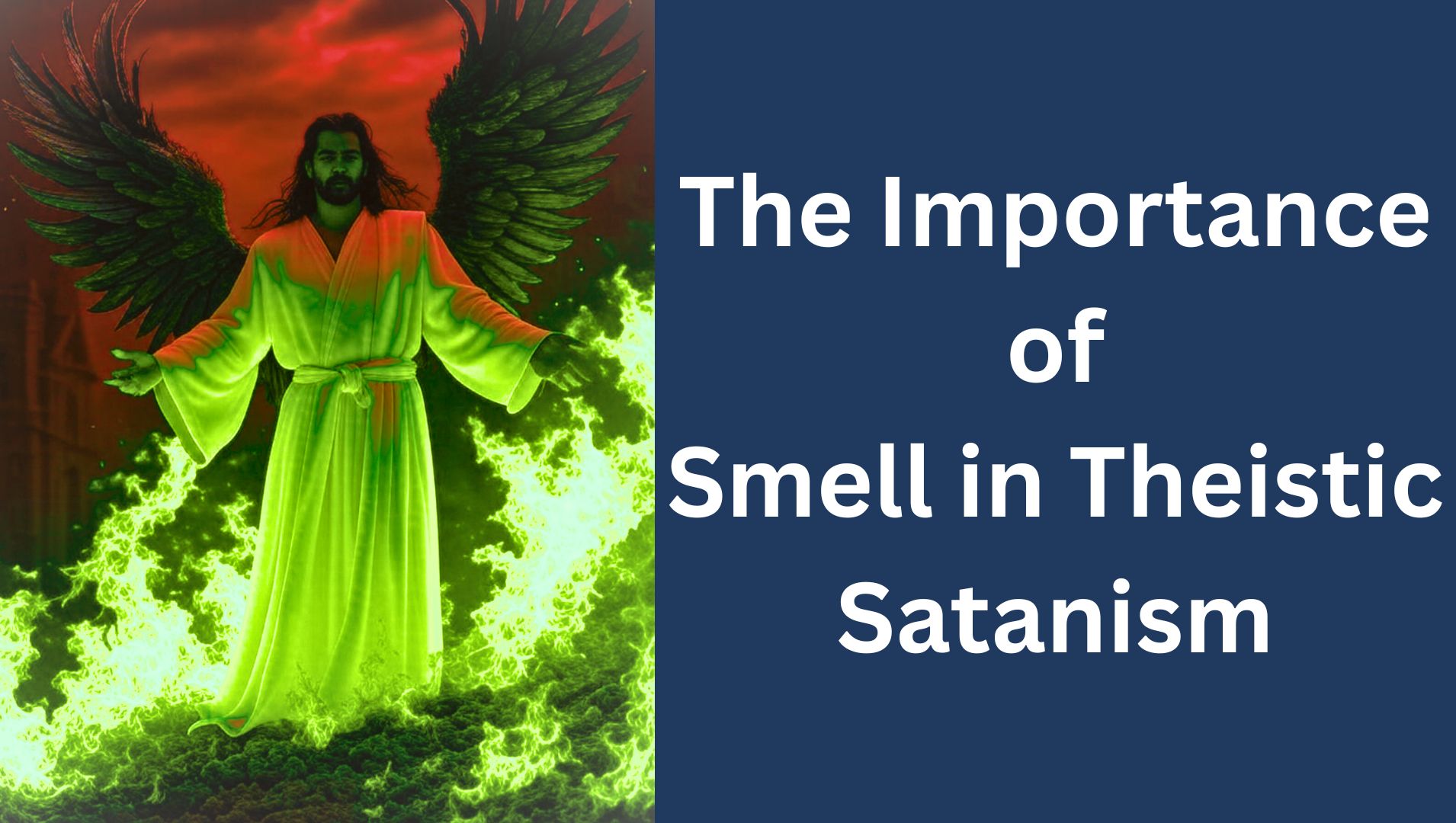
As a Satanic Magus and the leader of the Magnum Opus coven, I have long taught that Theistic Satanism is a path of visceral communion with Sathanas, the King of this World. Our rituals—whether the solemn Black Mass, the ecstatic Grand Climax, or the observances of Walpurgisnacht—demand the full engagement of the senses to forge a direct bond with the Devil Himself. Among these senses, smell stands as a primal, sacred force, a bridge between the flesh and the divine.
Drawing from my own experiences, the insights of Marcello Aspria’s Sex Smells: Odor, Sexuality, and the Erotic Imaginary from 2009, and the legacy of Aleister Crowley, I will explain why olfaction is vital to the Theistic Satanist, especially within the Covenant of Helel Ben Shachar. This covenant, a sacred agreement with Sathanas as the Shining One and Son of the Dawn, elevates smell as a tool for rebellion, erotic liberation, and spiritual transformation, aligning with our rejection of mundane dogma and our embrace of the infernal.
Reclaiming the Primal
The Western world, shackled by Enlightenment rationalism and Xtian dualism, has long scorned the sense of smell as animalistic and unworthy of the divine. As Aspria notes, thinkers like Immanuel Kant dismissed olfaction as a “subjective” sense, inferior to the cold precision of sight. Xtianity further condemned sensory pleasure, associating smells with the sinful body rather than the sanctified mind. For the Theistic Satanist, this historical repression is a wakeup call. We reject the chains of a culture that fears the primal, embracing smell as a sacred rebellion against the sterile false-morality of established religion.
Sathanas, as Helel Ben Shachar (or the Morning Star) represents defiance against oppressive authority. The Covenant of Helel Ben Shachar, a pledge to embody His light of wisdom and liberation, demands we reclaim what society has cast aside. Smell, with its raw, unfiltered power, becomes a weapon in this revolt—a way to honor the Devil by celebrating the senses He gifted to us. Aleister Crowley, whose Thelemic maxim “Do what thou wilt” echoes our ethos, used sensory immersion to shatter the boundaries of the mundane. During our rituals, we draw on this legacy, urging practitioners to wield smell as a key to unlocking the infernal divine.
The Alchemy of Ritual
Our rituals are sacred acts of communion, designed to draw us into the presence of Sathanas. Whether in the candlelit intensity of the Black Mass or the week-long preparation for the Grand Climax, every element—including focus, reverence, and intent—must align to avoid disrupting the energy we create and build. Smell is central to this alchemy. Incense, such as the frankincense described by Aspria’s respondent Mary, evokes a “transgressive” power, conjuring images of forbidden acts like “sex inside a church”. In our coven, we burn sage, myrrh, patchouli, and many others to create a sacred atmosphere, inviting the presence of Sathanas and the Hosts of Hell. These scents are not mere ambiance; they are offerings to Helel Ben Shachar, grounding us in the physical while opening the gates to the ethereal and spiritual.
Aleister Crowley’s Rites used incense to weave a mystical tapestry, a practice we use during rituals like the Spring Equinox, where the balance of creation and destruction mirrors the nature of Sathanas. The “animalistic” odors condemned as uncivilized by so-called scholars are especially potent in our workings. The musky, primal scents of the body—sweat, skin, or blood—honor the Devil’s call to embrace our raw physicality and humanity. In the Covenant of Helel Ben Shachar, we pledge to reject society’s sanitized ideals, using these scents to affirm our devotion to the unapologetic vitality of Sathanas.
The Erotic and the Divine
In Theistic Satanism, the erotic is a sacred path to self-discovery and communion with the Devil. My book A Satanic Grimoire explores the “unholy and lascivious fusion” of sex, black magic, and Sathanas—a trinity that finds expression through smell. Aspria’s respondents reveal the primal allure of body odors—Sylvia’s arousal at the “salty-sweaty” scent of a teenage boy, or Mark’s fascination with the “warm skin” of a woman emerging from the ocean. These accounts echo our belief that Sathanas liberates us from the shame imposed by a world that condemns, yet cannot resist, animalistic desire. The Covenant of Helel Ben Shachar calls us to embrace these scents as divine, celebrating the flesh as a temple of the Devil’s will.
Early sexologists like Iwan Bloch labeled strong olfactory preferences as “deviant” or “fetishistic”. To us, such labels are badges of honor, proof of our alignment with rebellion against conformity. Aleister Crowley’s life blended eroticism and magic, using sensory experiences to transcend the ordinary. During the rituals of Magnum Opus, we might anoint ourselves with musky oils or allow the natural scent of our bodies to mingle with incense, creating a sensory symphony that exalts Sathanas. These acts transform desire into a sacred offering, embodying the call of the Shining One to live without restraint.
Transcending the Mundane
Our rituals seek to transcend the mundane, drawing us into the presence of Sathanas and awakening the flame within. Smell, with its direct link to the limbic system, supporting a variety of functions including emotion, behavior, long-term memory, and olfaction, is the key to these altered states. In our Magnum Opus Coven, I teach that such scents can shift consciousness, opening the mind to Sathanas. Whether it’s the pungent or the pleasing sanctified smoke of ritual incense, these smells anchor us in the moment while propelling us toward the divine. Years later, we can experience a smell that takes us back in time and location, to an event archived deep within ourselves—flooding our memory and emotions.
Crowley’s sensory overload in rituals inspired my approach to the Grand Climax, where every element, including smell, is calibrated to disrupt rational thought and build Satanic energy. The Covenant of Helel Ben Shachar binds us to this transformative process, using smell to integrate the shadow self—the primal and sometimes rejected aspects of our nature. By embracing odors society deems “foul,” we honor Sathanas as the liberator of what lies hidden, forging a deeper connection to His essence.
The Fluidity of Olfaction
Aspria notes that olfactory perception is shaped by culture and personal experience, making it a fluid, individual phenomenon. For Theistic Satanists, this fluidity is a gift from Sathanas, allowing us to reclaim taboo smells such as cigarette smoke, leather, perfume, or the staleness of a room. Respondent Catherine’s arousal at the nostalgic scent of cigarette smoke, heightened by its forbidden status, mirrors our rejection of societal norms. During an episode on my podcast Theistic Satanism with Aleister Nacht, I encouraged practitioners to personalize their rituals, choosing scents that resonate with their unique path to Sathanas. The Covenant of Helel Ben Shachar is not a rigid dogma but a living treaty, tailored to each practitioner’s sensory and spiritual journey.
Iwan Bloch’s association of smell with “savages” or “degenerates” is, to us, pure insanity and a call to embrace the primal power of Helel Ben Shachar. I guide practitioners worldwide to craft rituals that honor this special and effective Satanic power, using smells to defy the sanitized world and connect with raw human vitality. Whether in a coven setting or solitary practice, the covenant empowers us to wield olfaction as a tool of rebellion and self-actualization.
Conclusion
As a Theistic Satanist, smell is a sacred gift from Sathanas, a key to unlocking the Covenant of Helel Ben Shachar. Aspria’s Sex Smells reveals the historical suppression of olfaction, which we reject as we embrace His call to defy convention. In our rituals, incense and body scents forge a direct link to the Devil, as seen through the scrying mirror. The erotic power of smell, from stale to exotic, embodies human liberation of desire, a truth I have explored in my writings and teachings over the past three decades.
Smell’s ability to evoke altered states aligns with our quest for communion with Helel Ben Shachar, the Shining One who illuminates our path. By embracing taboo scents, we honor His primal essence, living the covenant as a demonstration of our rebellion and empowerment. Join me in this sacred work, and let the aroma of the infernal guide you to the Devil’s truth.
Ave Sathanas!
Aleister Nacht
Published: July 1, 2025
By Aleister Nacht
Tags: Theistic Satanism, Helel Ben Shachar, smell, olfaction, Sathanas, Aleister Nacht, Magnum Opus, Black Mass, Grand Climax, Walpurgisnacht, occult, rituals, sensory spirituality, erotic liberation, Aleister Crowley